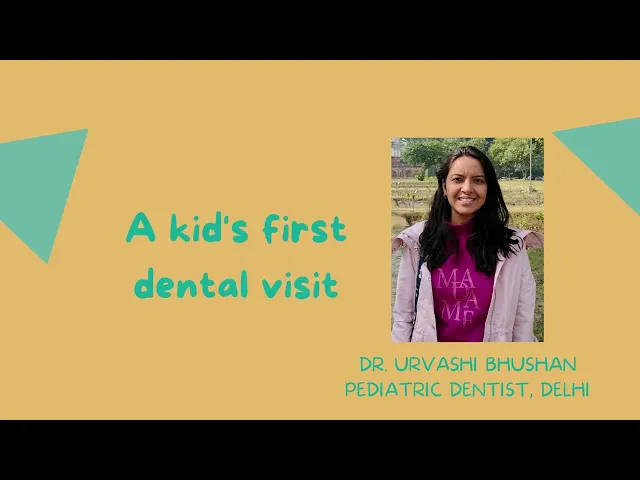
By Dr. Urvashi Bhushan, MDS (Pediatric & Preventive Dentistry)

Oral health is a vital part of overall health. By ensuring a healthy mouth for your little one, you help them reap the benefits for a lifetime. To achieve this, we recommend visiting a pediatric dentist (a children’s dentist) before your child’s first birthday and establishing a dental home.
A dental home is an ongoing relationship between the dentist and the patient, covering all aspects of oral health care in a comprehensive, continuously accessible, coordinated and family-centred way. It is a friendly, accessible place where all your child’s oral health needs can be taken care of.
A child’s dental home should be established within the first year of life. It helps build healthy oral hygiene habits from the earliest years. Few parents are aware that there are specialist dentists for children, called pediatric dentists. Ideally, your child’s first dental home should be with a pediatric dentist rather than a general dentist.
A dental home also helps with referrals to medical or other dental specialists when needed.
When should your child have their first dental visit?
The American Academy of Pediatric Dentistry (AAPD) recommends a child’s first visit to a pediatric dentist as soon as the first tooth appears, or by the first birthday at the latest. This early visit lays a healthy foundation for your child’s oral health from the start. Parents are counselled on healthy feeding practices, oral hygiene, teething, baby bottle (nursing) tooth decay, injury prevention, finger and thumb sucking, caries risk assessment and more. The visit also includes a comprehensive dental examination.
Often, parents bring their child to a dentist for the first time only when the child is in severe pain from tooth decay, or in an emergency such as a dental injury. A child already in pain is often anxious and fearful, and a first visit that should have been pleasant becomes an unpleasant one.
An early, preventive and friendly first visit helps build trust and positivity for years to come. It also helps avoid expensive and lengthy dental treatment later. Tooth decay spreads quickly in children because of their thin enamel. It can make eating difficult, leading to poor nutrition, affect speech, cause severe pain in advanced stages, and affect your child’s beautiful smile. Cavities can also lead to lower-than-ideal body weight and missed school days.
Oral hygiene tips for your little one
Oral hygiene should begin even before teeth come in. Clean your baby’s gums with a clean, wet gauze or washcloth wrapped around your finger, after feeds or at least at night before sleep.
Avoid putting your baby to sleep with a bottle of milk in their mouth. Frequent night-time bottle feeding can cause nursing caries (tooth decay).
Once teeth start coming in, at around 6–8 months, use a small, soft-bristled baby toothbrush with a rice-grain-sized smear of toothpaste.
Avoid added sugar in your child’s diet until 2 years of age.
Limit sugary foods and drinks.
Make brushing fun with songs or rhymes.
Once more teeth come in and start touching each other, you can introduce flossing.
Encourage your child to drink from a cup as they turn one.
During teething, children may have sore gums and drool a lot. Give them a clean teething ring, or rub their gums with a cool, wet washcloth.
Parents should take care of their own oral hygiene too, so that cavity-causing bacteria are not passed on to children.

Dr. Urvashi Bhushan · Pediatric dentist and founder, Cheery Smiles Kids Dentistry
Kids Don't Always Say It Hurts: 6 Quiet Signs of a Cavity in Milk Teeth
Kids Don't Always Say It Hurts: 6 Quiet Signs of a Cavity in Milk Teeth
Children rarely say "my tooth hurts". Six everyday signs of a cavity in milk teeth, and why you shouldn't wait for the tooth to fall out.
It’s Not Always About the Teeth: 7 Signs of Oral Development Problems Parents Often Miss
It’s Not Always About the Teeth: 7 Signs of Oral Development Problems Parents Often Miss
Mouth breathing, snoring, thumb sucking, feeding or speech difficulties can all be linked to how your child’s mouth is developing. Seven signs worth a check.
Nitrous Oxide: A Safe and Effective Aid in Pediatric Dentistry
Nitrous Oxide: A Safe and Effective Aid in Pediatric Dentistry
How happy gas helps anxious children relax during dental treatment, how safe it is, and answers to the 10 questions parents ask us most.

Cheery Smiles Kids Dentistry
Pediatric & Preventive Dentistry · Rohini, Delhi
B-26, Ground Floor, Overseas Apartments, Gate-2, Rajapur, Pocket 22, Sector 9, Rohini, Delhi 110085
Monday to Saturday, 10:30am to 7pm · Sunday closed
EXPLORE CHEERY SMILES
© 2026 Cheery Smiles Kids Dentistry · Pediatric & Preventive Dentistry · Rohini, Delhi